


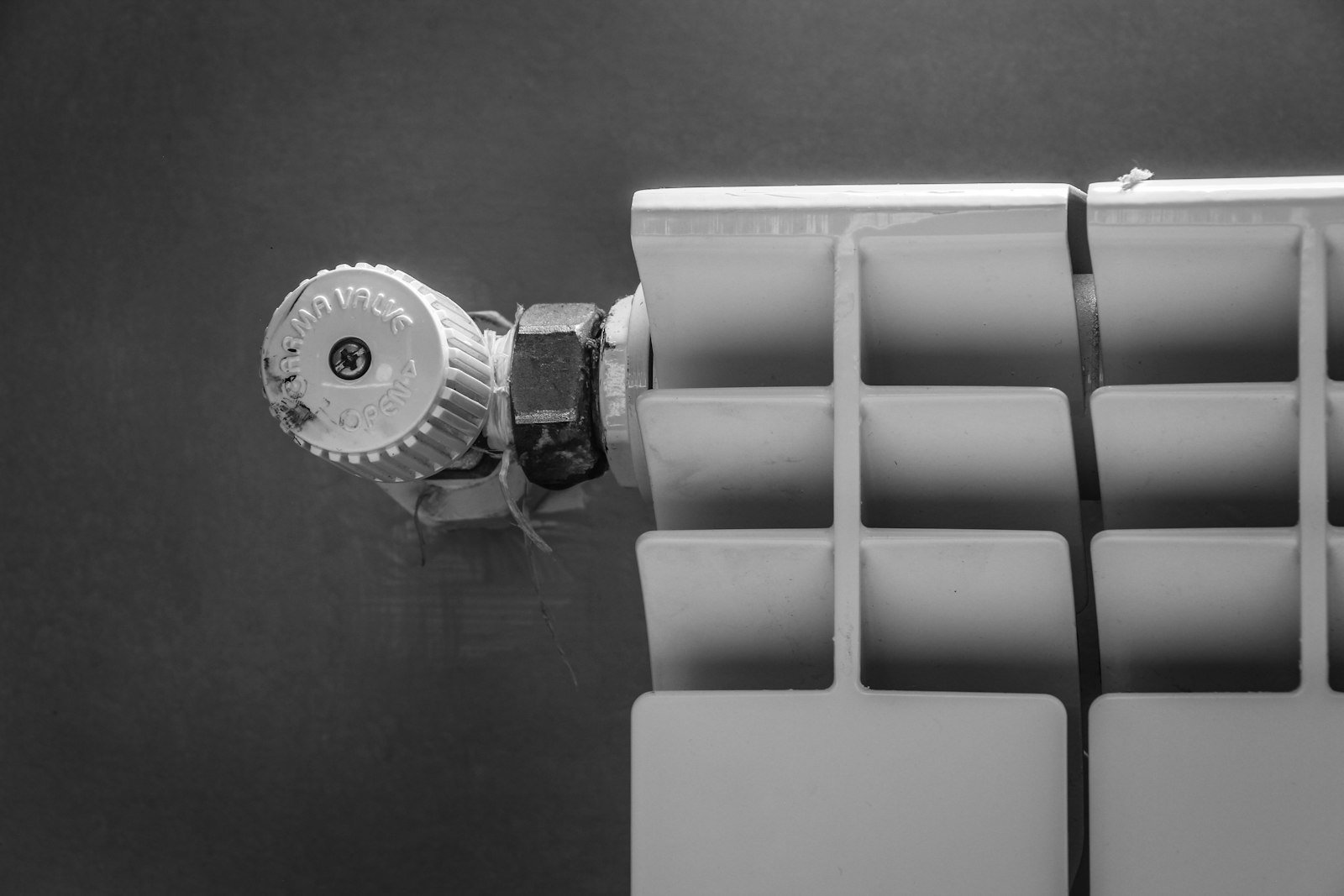
Knowing how to bleed a radiator saves you a call-out for the most common heating complaint there is: a radiator that is warm at the bottom and cold at the top. That cold band is a pocket of air sitting where hot water should be. Letting it out takes five minutes and a key, but the job only counts as done once you have checked the boiler pressure and worked out why the air got in.
In short
| Question | Short answer |
|---|---|
| Does it need bleeding? | Only if it is cold at the top and warm lower down, often with gurgling |
| What you need | A radiator key (or a flat screwdriver on many modern valves), a cloth, a small bowl |
| Heating on or off? | Off, and radiators cool, so you are not hit by scalding water |
| Which order | Downstairs first, starting furthest from the boiler, then upstairs |
| Afterwards | On a sealed system, check the boiler pressure gauge and top up if it has dropped |
| Needs bleeding every few weeks | Air or gas is getting in: that is a fault to find, not a chore to repeat |
Is it really air? Read the radiator first
Turn the heating on, wait twenty minutes, then run your hand carefully over each radiator. Where the cold patch sits tells you what is wrong, and only one pattern is solved with a bleed key.
- Cold at the top, warm below: trapped air. Bleed it.
- Warm at the top, cold at the bottom or in the middle: sludge, a mix of rust and debris that has settled inside the panel. Bleeding does nothing; the radiator needs flushing.
- Cold all over while others are hot: a closed valve, a stuck thermostatic pin or a badly balanced system.
- Cold upstairs only: on older systems, often a low water level or a pump problem rather than air.
Electric radiators and oil-filled heaters are sealed units and never need bleeding.
How to bleed a radiator, step by step
1. Switch the heating off and let it cool
Turn the heating off at the programmer or thermostat and give the radiators time to cool. Water in a running system is hot enough to scald, and while the pump is moving it around the air does not settle neatly at the top.
2. Find the bleed valve
It is a small square pin or slotted screw at one top corner of the radiator. A double-panel radiator has one on each panel, so bleed both. On towel rails and vertical radiators it is often hidden at the top of the back or on the side edge.
3. Open it a quarter turn
Hold the cloth under the valve, fit the key squarely and turn it anti-clockwise, a quarter to half a turn at most. You will hear a hiss as the air escapes. Do not unscrew it further: the pin is small and can come out entirely.
4. Close it as soon as water appears
When the hiss gives way to a steady dribble of water, close the valve clockwise. Snug is enough; forcing it damages the seat and leads to a slow drip later.
5. Work round the house in order
Start with the downstairs radiator furthest from the boiler, then work back towards it, then do the same upstairs. Air rises and travels with the water, so this order chases it out instead of moving it from one radiator to another.
Check the boiler pressure afterwards
Most homes with a combi or system boiler have a sealed system: the water is held under pressure, shown on a gauge on the front of the boiler in bar. Every bit of air and water you release lowers that pressure, and a boiler that drops too low will lock out to protect itself.
Many boilers expect around 1 to 1.5 bar with the heating cold, but the right figure is printed in your boiler’s manual, and some gauges carry a green band. If the needle has dropped below it, the boiler is topped up through the filling loop, a short braided hose or a key-operated valve under the boiler. Following the manual, this is a job you can do yourself: open slowly, watch the gauge, close as soon as you reach the target.
Older homes with a cold water tank in the loft usually have an open-vented system instead. The small feed tank tops the circuit up on its own, so there is no gauge to check. If you are not sure which you have, a pressure gauge on the boiler means sealed.
Turn the heating back on, wait, and feel the radiators again. If the top is now warm, the job is done.
If it needs bleeding again and again
A radiator that collects air every few weeks is telling you something. Air or gas is getting into the water, and each bleed also lets in fresh water that brings new oxygen and speeds up corrosion inside the steel panels.
The usual causes:
- A small leak on a valve or joint lets water out and air in. On a sealed system, you will also see the pressure creeping down between top-ups.
- Corrosion inside the radiators produces hydrogen. If the “air” you release smells or the water comes out black, the system lacks corrosion inhibitor and probably holds sludge.
- A pump or pipework fault that draws air in at an open vent, on older open-vented systems.
A heating engineer can test the inhibitor level, look for the leak and, if needed, flush the system and fit a magnetic filter that catches debris before it settles. Anything inside the boiler casing must be done by a Gas Safe registered engineer on a gas boiler: it is a legal requirement, not a formality.
What bleeding will not fix
A fully bled radiator gives out the heat its size and water temperature allow, no more. If a room is still cold with every radiator hot from top to bottom, look at the room before the heating system: a draughty window, an uninsulated external wall or a radiator hidden behind a sofa or long curtains. A radiator that is simply too small for the room shows up as hot metal and a chilly space, and that is a question for a heat loss calculation, not a bleed key.
Other practical guides to heating and electricity are in the Energy section.
