


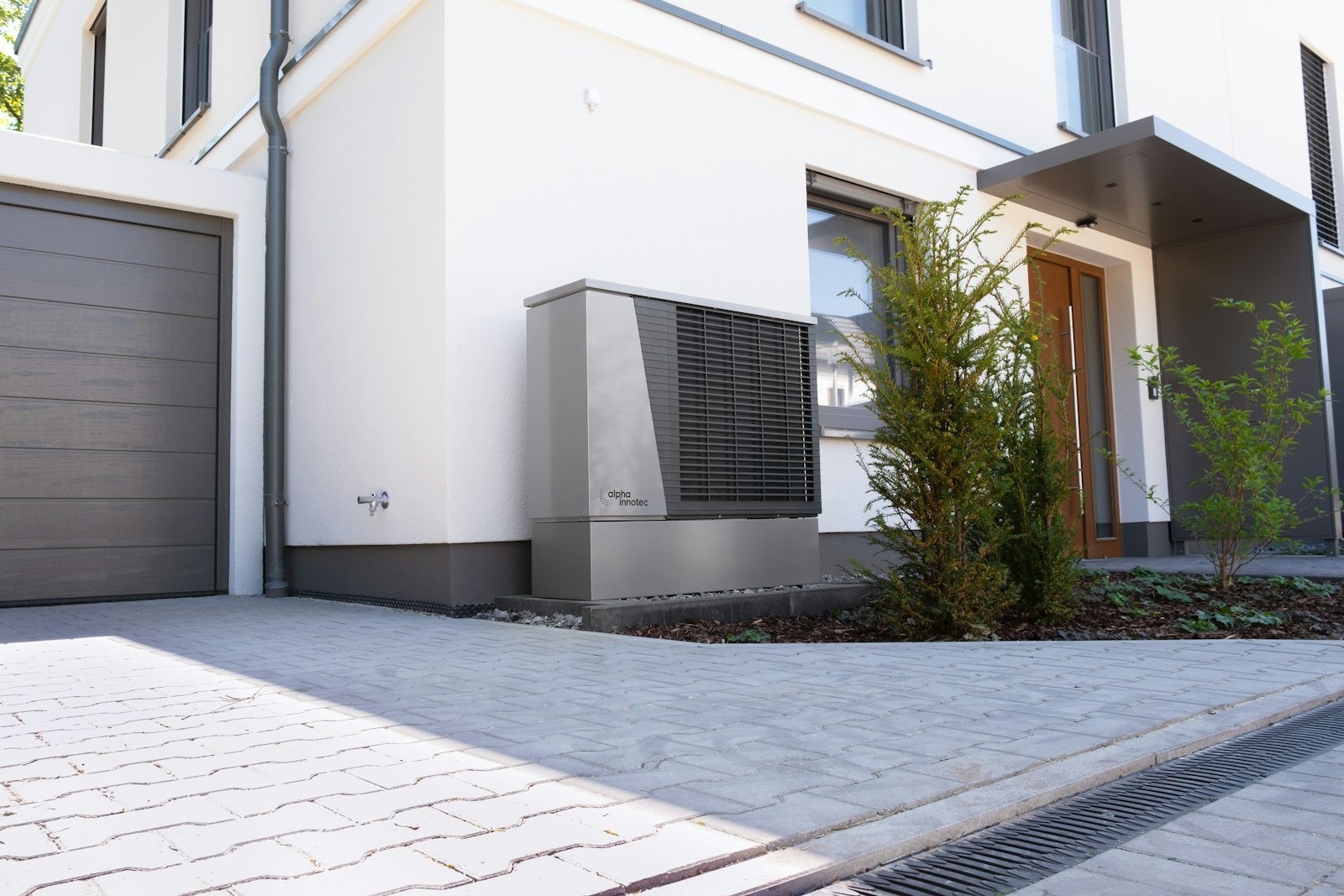
How does a heat pump work when the air outside is colder than the house it heats? It does not make heat the way a boiler does. It moves heat that is already in the outdoor air, the ground or water, and raises it to a temperature the radiators can use. That is why one unit of electricity can deliver three units of heat or more, and why the same machine can disappoint in a house where it has to work too hard.
In short
| Question | Short answer |
|---|---|
| The principle | A fridge in reverse: it takes heat from outside and releases it inside |
| Where the heat comes from | Outdoor air (air source), the ground (ground source) or water |
| Efficiency | Expressed as a COP or SCOP: 3 means 3 kWh of heat for 1 kWh of electricity |
| What decides the running cost | The flow temperature to the radiators, the insulation, and your electricity tariff |
| Does it work in winter? | Yes, down to well below freezing, with lower efficiency on the coldest days |
| Hot water | Usually stored in a cylinder, so it does not replace a combi boiler like for like |
The cycle in four steps
Inside the unit, a fluid called a refrigerant circulates in a closed loop. It boils at a very low temperature, well below 0 °C, and that is the whole trick.
- Evaporator: outdoor air is blown across a coil containing the cold refrigerant. Even at 0 °C, the air is warmer than the refrigerant, so heat flows into it and the fluid boils into a gas.
- Compressor: the electric compressor squeezes that gas. Compressing a gas raises its temperature, the same effect you feel when a bicycle pump warms up.
- Condenser: the now hot gas passes through a heat exchanger and gives its heat to the water of the heating circuit. As it cools, it turns back into a liquid.
- Expansion valve: the liquid passes through a narrow valve, its pressure drops, and it becomes very cold again, ready to pick up more heat outside.
The electricity drives the compressor and fans. It is not turned into heat directly, as in an electric heater; it pays for moving heat from a cold place to a warmer one.
A fridge does exactly the same, taking heat out of the food compartment and releasing it through the grille at the back. A heat pump simply does it with your garden as the cold side and your home as the warm side.
Air source, ground source, air to air
- Air source (air to water): the most common in the UK. An outdoor unit takes heat from the air and heats the water for radiators or underfloor heating and the hot water cylinder.
- Ground source: pipes buried in trenches or a borehole take heat from the ground, which stays at a fairly steady temperature all year. More efficient in deep winter, but the groundworks make it more expensive.
- Air to air: blows warm air into rooms, like a reversible air conditioner. It does not provide hot water.
COP and SCOP: what the number means
The coefficient of performance (COP) is the heat delivered divided by the electricity used, at a given moment. The seasonal COP (SCOP), or seasonal performance factor, averages that over a whole heating season, which is the figure that matters for your bills.
A worked example: a house that needs 12,000 kWh of heat a year.
- With a heat pump running at a SCOP of 3: 12,000 ÷ 3 = 4,000 kWh of electricity.
- With a gas boiler at 90% efficiency: 12,000 ÷ 0.9 = about 13,300 kWh of gas.
Which is cheaper depends on the price of each kWh on your tariff. Multiply each figure by your own unit rates: a SCOP of 3 roughly compensates for electricity costing three times as much per kWh as gas. Smart or heat pump tariffs with cheaper hours change the result again.
Why flow temperature matters so much
The flow temperature is the temperature of the water sent to the radiators. The bigger the gap between the outdoor air and that water, the harder the compressor works and the lower the COP. The same heat pump might reach a COP above 4 sending water at 35 °C on a mild day, and closer to 2 sending water at 55 °C on a frosty one.
So a heat pump works best with:
- Low flow temperatures, typically 35 to 45 °C instead of the 60 to 70 °C many boilers run at.
- Larger emitters: bigger radiators or underfloor heating give out the same heat with cooler water. An installer may replace some radiators for this reason.
- A well insulated house: lower heat loss means lower flow temperatures are enough. Loft and wall insulation and draught-proofing are worth doing first.
- Steady running: a heat pump is designed to run long and low, keeping the house at an even temperature, rather than blasting heat for an hour morning and evening.
A heat loss calculation, room by room, is the basis of a proper installation. It sizes both the heat pump and the radiators. A unit that is too small leaves you cold in January; one that is too big switches on and off constantly and wastes energy.
What happens when it is freezing outside
Below about 0 °C, there is still heat in the air to extract; the efficiency simply falls. The other winter effect is frost on the outdoor coil: moisture in the air freezes on the cold fins. The unit runs a short defrost cycle from time to time, briefly reversing the flow to melt it. You may see steam rising from the unit; that is normal.
Hot water and space
Most air to water heat pumps heat a hot water cylinder rather than heating water on demand like a combi boiler. You need room for it, often in an airing cupboard or a loft. The water is stored at around 50 °C, and the system periodically heats it higher to control legionella bacteria.
Outside, the unit needs a spot with free airflow, a solid base and some distance from bedroom windows, because the fan and compressor make a steady hum. Manufacturers publish the noise level.
Grants and installers
In England and Wales, the Boiler Upgrade Scheme gives £7,500 towards an air source or ground source heat pump replacing a fossil fuel system, according to gov.uk and Energy Saving Trust guidance checked in November 2026. The installer must be certified by the Microgeneration Certification Scheme (MCS) and applies for the grant on your behalf. Scotland and Northern Ireland have their own schemes. Grant rules change often, so check the current conditions before signing anything.
Most domestic air source heat pumps are permitted development and do not need planning permission, but there are conditions on size and siting, and stricter rules for listed buildings and conservation areas. Your local planning authority can confirm.
What it does not change
A heat pump does not fix a draughty house or radiators blocked by furniture. If the system still has air in it after installation, the same checks apply as for any wet system: see how to bleed a radiator. More guides to heating and electricity are in the Energy section.
