


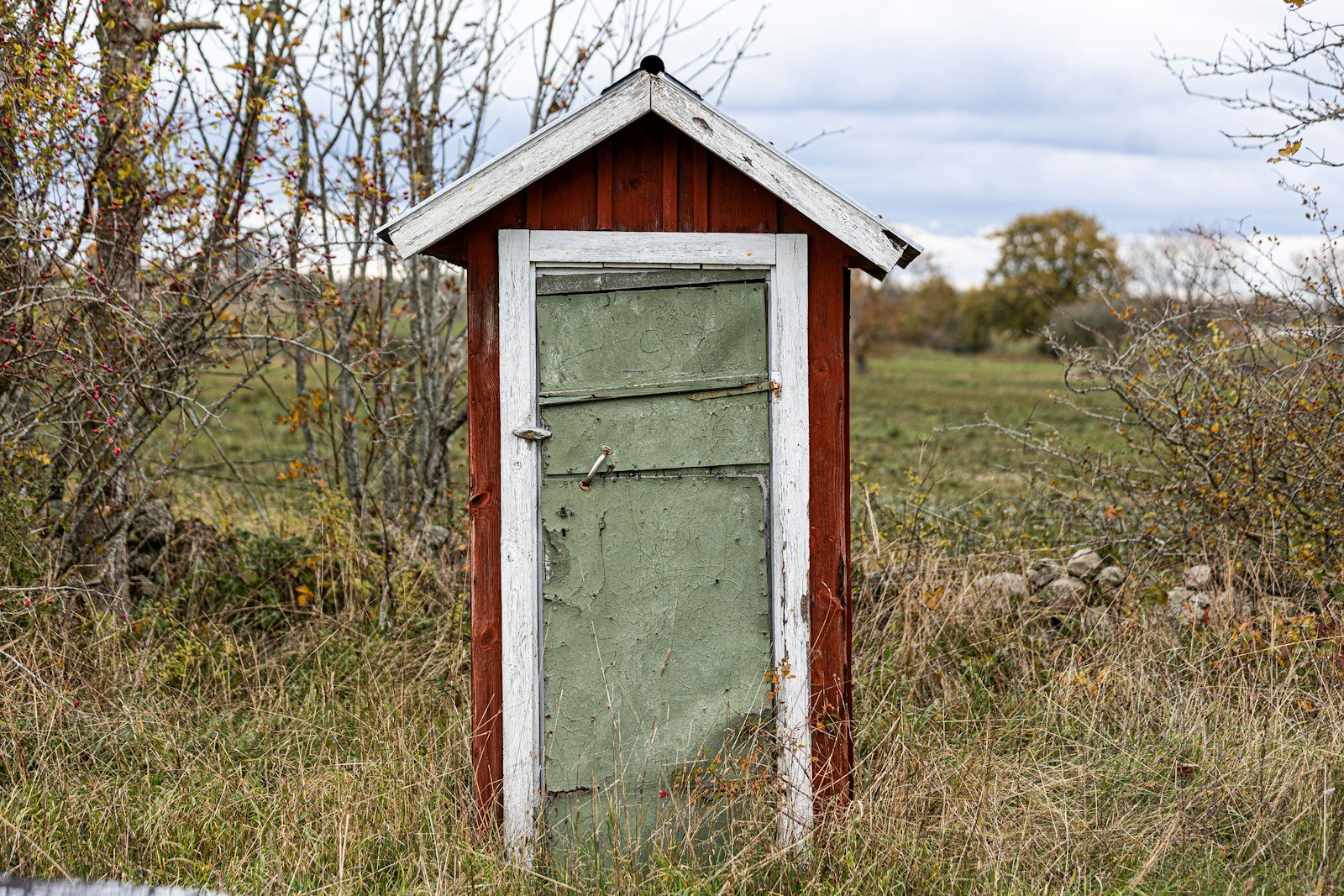
A composting toilet is a toilet that uses no water. Instead of flushing waste away, it collects it, keeps it fairly dry and lets natural organisms break it down into a soil-like material. Most modern units separate urine from solids, because that is what keeps them from smelling. The toilet itself is only half the system: the composting happens over many months, either in chambers under the seat or in a separate bin, and the result needs to be handled with care.
Quick answers
| Question | Short answer |
|---|---|
| Does it use water? | No, apart from hand washing |
| Why doesn’t it smell? | Urine is kept separate, the solids stay dry and air is drawn out by a vent |
| What goes in after each use? | A “soak” material such as sawdust or wood shavings |
| Does the toilet itself make compost? | Often not: many units only collect, and composting happens elsewhere |
| How long before the compost is usable? | At least a year of resting, ideally two, according to the Centre for Alternative Technology |
| Where to use the compost | On ornamental plants, shrubs and trees, not on food crops you eat raw |
| Where it makes sense | Cabins, allotments, boats, off-grid sites, garden offices |
How it works
The basic process has four parts.
- Collection. Solids fall into a chamber or container under the seat. In most designs, urine is caught at the front of the bowl and sent to a separate tank or a soakaway.
- Soak. After each use, a handful of dry carbon-rich material covers the solids. Sawdust, wood shavings, coir or wood-based cat litter are common. It absorbs moisture, limits smells and balances the nitrogen in the waste.
- Ventilation. A vent pipe, often with a small fan, draws air from the bowl down through the chamber and out above the roof line. The airflow keeps the chamber dry and stops smells coming back into the room.
- Composting. Bacteria, fungi and, in larger chambers, worms break down the material into humus. Time and a fairly dry, aerated mix do most of the work.
Why urine separation matters
Urine makes up most of the liquid we produce. Mixed with solids, it turns the pile wet and airless, which leads to anaerobic decay and the classic sewage smell. The Centre for Alternative Technology (CAT), a Welsh charity that has run composting toilets for decades, describes keeping urine separate as essential for odour-free composting in the UK climate.
Separation only works if people sit down. On sites with many male users, a waterless urinal alongside the toilet helps.
Separating or composting?
The words are often used loosely, which causes confusion.
- A separating toilet collects urine and solids in two containers. No composting happens inside the unit. When the solids bucket is full, you empty it into a dedicated compost bin to finish the job. Most compact units sold for boats, vans and tiny houses work this way.
- A composting toilet in the strict sense has a chamber big enough for the material to stay in place and decompose there. A common robust design uses two chambers: one fills for about a year while the other rests, then the seat moves across.
The UK Canal and River Trust stresses this point to boaters: a separating toilet is only the first part of a composting system, and the solids must not be bagged into general waste bins, where they contaminate recycling.
Twin-chamber systems
CAT recommends alternating between two chambers each year for the UK climate:
- The active chamber fills with waste and soak over roughly a year.
- The seat moves to the second chamber, and the first one rests for a full year with no fresh additions.
- At the end of the second year, the first chamber is emptied and the cycle starts again.
Because nothing fresh is added to a resting chamber, mature compost never gets mixed with new waste. CAT suggests seeding a new chamber with a spadeful of finished compost, and adding brandling worms if decomposition is slow.
Day-to-day use
Weekly and yearly tasks
- Every use: add soak, close the lid.
- Every week: check the chamber, level any peak under the seat and top up soak if needed, as CAT advises.
- Urine tank: empty it regularly if it is not plumbed to a soakaway.
- Once a year or so: empty the rested chamber or move the finished compost.
Common problems
| Problem | Likely cause | What to do |
|---|---|---|
| Smell in the room | Wet chamber, poor ventilation or a back-draught on windy days | Check urine separation, add soak, check the vent and seal of the chamber |
| Flies | Moist compost, unsealed chamber or vent without a fly screen | Keep it drier, seal openings, fit a screen and a fly trap |
| Slow breakdown | Too cold, too dry or too little life in the pile | Add a spadeful of mature compost or brandling worms |
| Chamber filling fast | Too much soak | Use just enough soak to cover the solids |
Using the compost safely
Human waste can carry bacteria, viruses and parasites. Proper composting destroys most of them, but only with enough time. CAT states that nearly all pathogens are broken down if the material is left for at least a year, ideally two.
As an extra precaution, use the finished compost where it does not touch the edible parts of crops: around trees, hedges, shrubs and ornamental beds. Do not use it on salad crops, root vegetables or anything eaten raw. Material that still looks or smells like waste is not ready: leave it longer.
Diluted urine is a nitrogen-rich fertiliser that some gardeners use on non-edible plants or compost heaps. Dilute it well and keep it away from leaves you plan to eat.
Rules and where to check
The rules depend on where you live, so check with your local authority before installing one in a building.
- England: CAT points out that composting toilets are mentioned in the Building Regulations guidance for sanitation. It requires that the waste can be disposed of on or off site, that it can be removed without passing through living space or a kitchen, and that the installation is not in an area where flood water could make it ineffective.
- Water sources: keep any toilet chamber, soakaway or compost heap well away from wells, boreholes and streams. CAT gives 15 metres as a general distance from water supplies, which may be reduced on some soils.
- Elsewhere: in the United States, Canada, Australia and other countries, rules vary by state, province or council. Some accept certified units, others limit them to sites without a sewer connection.
Moorings, campsites and allotment sites often have their own rules too.
Where it makes sense
This kind of toilet is most useful where a flushing toilet is difficult or expensive:
- off-grid cabins and holiday huts;
- allotments and community gardens;
- boats and campervans;
- garden offices and workshops far from the drains;
- sites with a limited water supply.
In a house already connected to the sewer, it is more of a personal choice. It saves flushing water, but it needs space, a vent route and regular care.
More practical guides on reducing your household’s impact are in our environment section.
Frequently asked questions
Do they smell?
A well-designed and well-used one should not. Smells almost always come from a wet chamber, missing urine separation or a ventilation problem.
Can you put toilet paper in?
In most systems, yes: it adds carbon like the soak material. Some small separating units recommend binning it to save space. Wet wipes and sanitary products should never go in.
Do they need electricity?
Not necessarily. A passive vent can work with careful design, but many units use a small fan for reliable airflow. CAT advises against models that use electric heating elements to dry or heat the compost, because of their energy use.
