


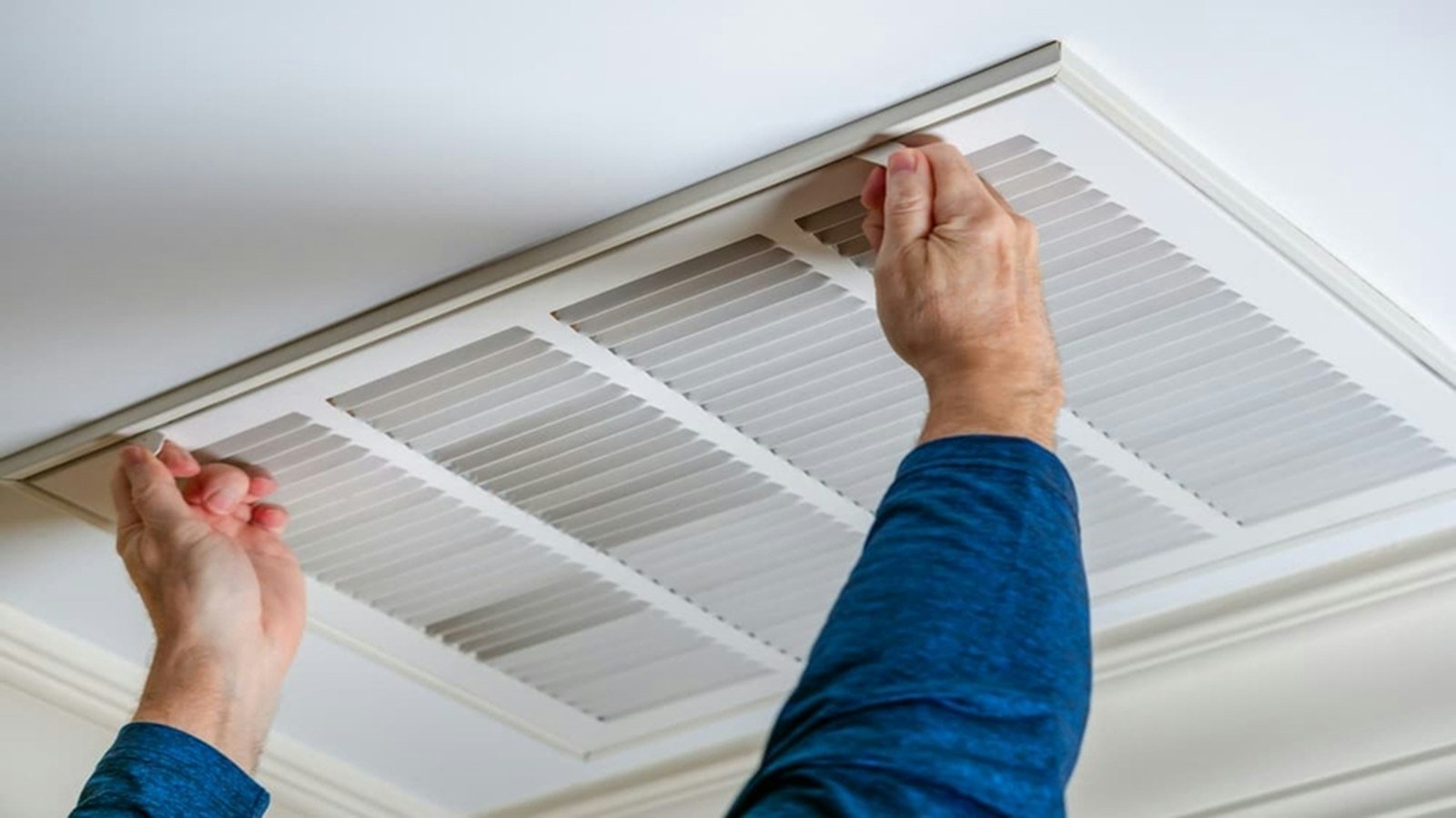
Positive input ventilation, or PIV, is a small fan unit that pushes a gentle, continuous flow of filtered air into a home, usually from the loft. The slight pressure it creates drives damp indoor air out through the gaps every house has, before the moisture can settle on cold windows and walls. It works well against condensation in many homes, but it is not a cure for every kind of damp, and it suits some houses better than others.
In short
| Question | Short answer |
|---|---|
| What it does | Supplies filtered air into the home continuously, pushing humid air out |
| Where it goes | Usually in the loft, with a diffuser in the landing or hall ceiling; wall-mounted versions exist for flats |
| Best at | Condensation on windows and mould caused by everyday moisture |
| Not a fix for | Rising damp, leaks, penetrating rain or a wall defect |
| Running cost | Depends on the fan’s wattage and whether it has a heater; work it out from the unit’s rating (method below) |
| Installation | Simple for many homes, but the mains connection needs a qualified electrician |
How a PIV unit works
Cooking, showers, drying clothes and breathing put litres of water vapour into the air of a home every day. When that humid air meets a cold surface, such as a window pane or an external wall corner, it condenses. Left there, it feeds black mould.
A loft-mounted PIV unit draws air from the loft space, which is usually drier and slightly warmer than outside air, passes it through a filter, and blows it into the house through a ceiling diffuser on the landing or in the hall. Because air is always being added, the house sits at a very slight positive pressure. Stale, humid air is pushed out through trickle vents, gaps around doors and windows and other leakage points, instead of lingering long enough to condense.
The idea is not new: Nuaire, the manufacturer that developed the system, says its first anti-condensation units date from 1972.
Loft, wall or heated
- Loft-mounted units suit houses and bungalows with an accessible loft. They are the most common type.
- Wall-mounted units take air from outside through an external wall, for flats or homes with no loft.
- Heated units add a small heater that warms incoming air when it falls below a set temperature, so it does not feel draughty in winter. Some units also have a summer setting that stops warm loft air being pushed in on hot days.
When PIV helps, and when it won’t
PIV is a good fit when:
- the problem is condensation: streaming windows in the morning, mould in corners and behind furniture, a musty smell;
- the whole home is affected, not just one room;
- the home is fairly airtight, for example after new double glazing, with little natural ventilation.
PIV will not solve damp caused by water getting into the building. Rising damp at the base of walls, a leaking pipe, faulty gutters or rain soaking through brickwork need fixing at the source. If damp patches appear or grow after rain, look outside first, as explained in our guide to cavity wall insulation problems.
It also works alongside, not instead of, extraction where moisture is made. Kitchens and bathrooms still need extractor fans to remove steam at source.
Things to check before fitting one
- The loft must be ventilated, with no holes letting humid house air into it, and bathroom or kitchen fans must vent outside, not into the loft. Manufacturers stress this point.
- Loft insulation should be in good order. In a poorly insulated loft, air drawn from it will be cold in winter. See our guide to loft insulation.
- Somewhere for the air to leave. Trickle vents on windows help the air move through the house.
- Noise. A correctly installed unit should be very quiet, but a diffuser right above a bedroom door may be noticed at night.
PIV or a dehumidifier?
A dehumidifier pulls moisture out of the air in one room and collects it in a tank. It suits a single problem room or drying washing. It needs emptying and is moved from room to room.
PIV treats the whole home at once and runs on its own with little attention. For condensation that affects several rooms, it is usually the more practical option. For one damp bedroom, a dehumidifier may be enough.
Working out the running cost
Rather than trust a headline figure, calculate it from the unit’s own data. Find the power in watts in the specification sheet, for the speed it will actually run at, then:
watts × hours per day × 365 ÷ 1,000 = kWh per year
Multiply by the price per kWh on your electricity bill.
Two examples, using illustrative figures rather than any specific model or tariff:
- an unheated fan drawing 10 W around the clock uses 10 × 24 × 365 ÷ 1,000 = about 88 kWh a year;
- a heater rated at 400 W that runs for 3 hours a day over 150 cold days adds 400 × 3 × 150 ÷ 1,000 = 180 kWh.
The fan itself is cheap to run. The heater, when there is one, is where most of the cost comes from, and how much it runs depends on its thermostat setting and the weather. PIV also replaces some warm indoor air with fresher air, which can add a little to heating needs in a draughty or poorly insulated home.
Installation and upkeep
Many loft units can be fitted in a few hours: the unit sits on the loft floor or hangs from the rafters, a hole is cut for the ceiling diffuser, and a fused spur supplies power. The electrical connection must be done by a qualified electrician.
Upkeep is light. The filter needs cleaning or replacing at the interval the manufacturer gives. A clogged filter cuts the airflow and the benefit.
Give it time: the air starts moving as soon as the unit is on, but walls and furnishings that have soaked up moisture can take a few weeks to dry out.
If you rent
Condensation and mould in a rented home should be reported to the landlord in writing. PIV is one of several fixes a landlord may choose; others include better extraction, insulation or repairs. In England, social landlords must investigate and fix damp and mould hazards within fixed timescales under Awaab’s Law, in force since 27 October 2025.
For simpler first steps, see how to stop condensation on windows. More guides are in the Housing section.
